


03/17/2026

Regular vs Supplemental Wages: How to Classify Bonuses, PTO, and Fringe Benefits

For payroll tax purposes, the IRS distinguishes between regular wages and supplemental wages.

Regular wages are payments made for routine work performed during a pay period. These wages are typically subject to standard payroll tax withholding using normal tax tables. Examples of regular wages include hourly wages, salary payments, and overtime pay.

Supplemental wages are payments made in addition to an employee’s regular earnings. These payments may be taxed differently depending on how they are issued. Common examples of supplemental wages include bonuses, commissions, PTO payouts, severance pay, certain taxable fringe benefits, amongst others.

⚠️Note: This information is for informational purposes only and does not constitute formal tax, legal, or compliance advice. Always consult with qualified tax advisors, legal counsel, and your organization’s internal teams for guidance specific to your situation. Additional regulations may apply. For the most accurate and up-to-date information, refer to official government resources and regulatory agencies.

Why Does Wage Classification Impact Payroll Taxes and Compliance?

Have you ever stared at a new payroll earning code and wondered exactly which wage type to assign? Setting up payroll earning codes for bonuses, paid time off (PTO), reimbursements, and other payments sounds like a simple configuration choice. However, the wage type you assign directly impacts how payroll taxes are calculated, whether earnings count toward overtime, and how wages appear on tax forms.

If you set the wage type incorrectly, your payroll runs can produce incorrect withholding, reporting errors, or costly compliance issues.

That is why choosing the correct wage type for each earning code is a critical part of your payroll setup. Let us walk through how you can choose the right wage type for common earning scenarios to keep your payroll accurate and compliant all year long.

How Does the IRS Require Different Wage Types to Be Taxed?

Not all employee earnings are treated the same way for tax and payroll purposes. The IRS has strict guidelines on how different payments should be taxed and reported.

Each category follows different tax withholding rules and reporting requirements. For example, supplemental wages like bonuses and commissions are often withheld at a flat supplemental rate rather than using standard payroll tax calculations.

For federal income tax withholding, supplemental wages may be taxed using one of two IRS-approved methods:

  • Percentage method: A flat withholding rate (currently 22% for most supplemental wages).
  • Aggregate method: Supplemental wages are combined with regular wages and taxed using standard withholding tables.

Choosing the correct wage classification ensures payroll systems calculate withholding and reporting correctly.

How to Choose the Right Wage Type for Earning Codes

Understanding how different earnings are generally classified can help payroll teams configure earning codes correctly and avoid tax withholding or reporting issues. The IRS distinguishes between several types of wages depending on how and when the payments are made.

The sections below explain how common earning categories are typically treated for payroll and tax purposes.

Note: Refer to Publication 15 (2026), (Circular E), Employer’s Tax Guide for detailed guidance.

Earning Type What It Is Common Examples Tax Treatment & Payroll Classification
Regular Pay (Hourly or Salary) Standard earnings for work performed during a pay period. Standard hourly wages, salaried earnings, overtime pay, double-time pay Subject to standard payroll tax withholding rules and typically included in overtime and wage-based benefit calculations. Usually classified as regular wages.
Bonuses and Commissions Additional earnings paid on top of an employee’s regular compensation, often tied to performance or incentives. Performance bonuses, holiday bonuses, sales commissions, incentive payments Generally treated as supplemental wages. Federal income tax withholding may use the percentage method or the aggregate method.
Paid Time Off (PTO) Payouts Payments made for unused vacation, sick leave, or personal time. Unused vacation payouts at termination, cash-out programs for unused leave, annual PTO buyback programs May be treated as supplemental wages when paid separately from regular wages. In some cases, employers may combine them with regular wages and apply standard withholding using the aggregate method.
Expense Reimbursements Payments to employees for business-related expenses. Travel expenses, mileage reimbursements, business supplies, equipment purchases Usually non-taxable under an IRS-compliant accountable plan. If paid outside an accountable plan, they are generally treated as taxable wages and may be categorized as supplemental earnings.
Prizes, Awards, and Other Taxable Fringe Benefits Cash or non-cash benefits that create taxable compensation when no IRS exclusion applies. Gift cards, certain employee awards, personal use of company vehicles, employer-paid gym memberships When taxable, these items are generally treated as supplemental wages for withholding purposes. Some fringe benefits may still qualify for exclusion under IRS rules.
Tips Gratuities received by employees and reported to their employer. Cash tips, credit card tips, reported tip income Considered taxable wages for federal income tax, Social Security, and Medicare purposes. Often tracked separately due to unique reporting requirements.
Tax-Exempt Earnings Payments that qualify for exclusion from federal income taxation when they meet specific IRS requirements. Qualified disaster relief payments, certain employer-provided educational assistance benefits Typically classified as non-taxable earnings in payroll systems, provided the payment meets the applicable IRS criteria.
Backpay Wages paid after the original pay period for work that was already performed. Payroll corrections, delayed compensation adjustments, retroactive bonuses or commissions Generally taxed in the year they are paid. Payroll systems often classify backpay based on the original earning type, such as regular wages or supplemental wages.

How Does Greenshades Helps Manage Wage Type Classification?

Classifying earnings correctly is an important part of payroll setup, especially when different wage types affect tax withholding, reporting, and payroll calculations. Greenshades simplifies this process by allowing payroll teams to define and manage earning codes directly within payroll settings.

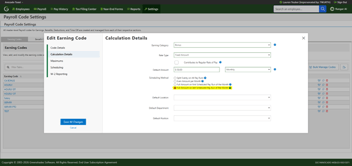
When creating or updating an earning code in Greenshades, administrators can assign the appropriate wage type classification, which determines how the system:

  • Calculates federal and payroll tax withholding
  • Applies payroll calculations such as overtime and wage adjustments
  • Reports earnings for tax forms and compliance purposes

Because these rules are configured at the earning code level, Greenshades automatically applies the correct treatment during payroll processing. This helps ensure that payments such as bonuses, PTO payouts, reimbursements, and fringe benefits are handled consistently and in alignment with payroll tax requirements.

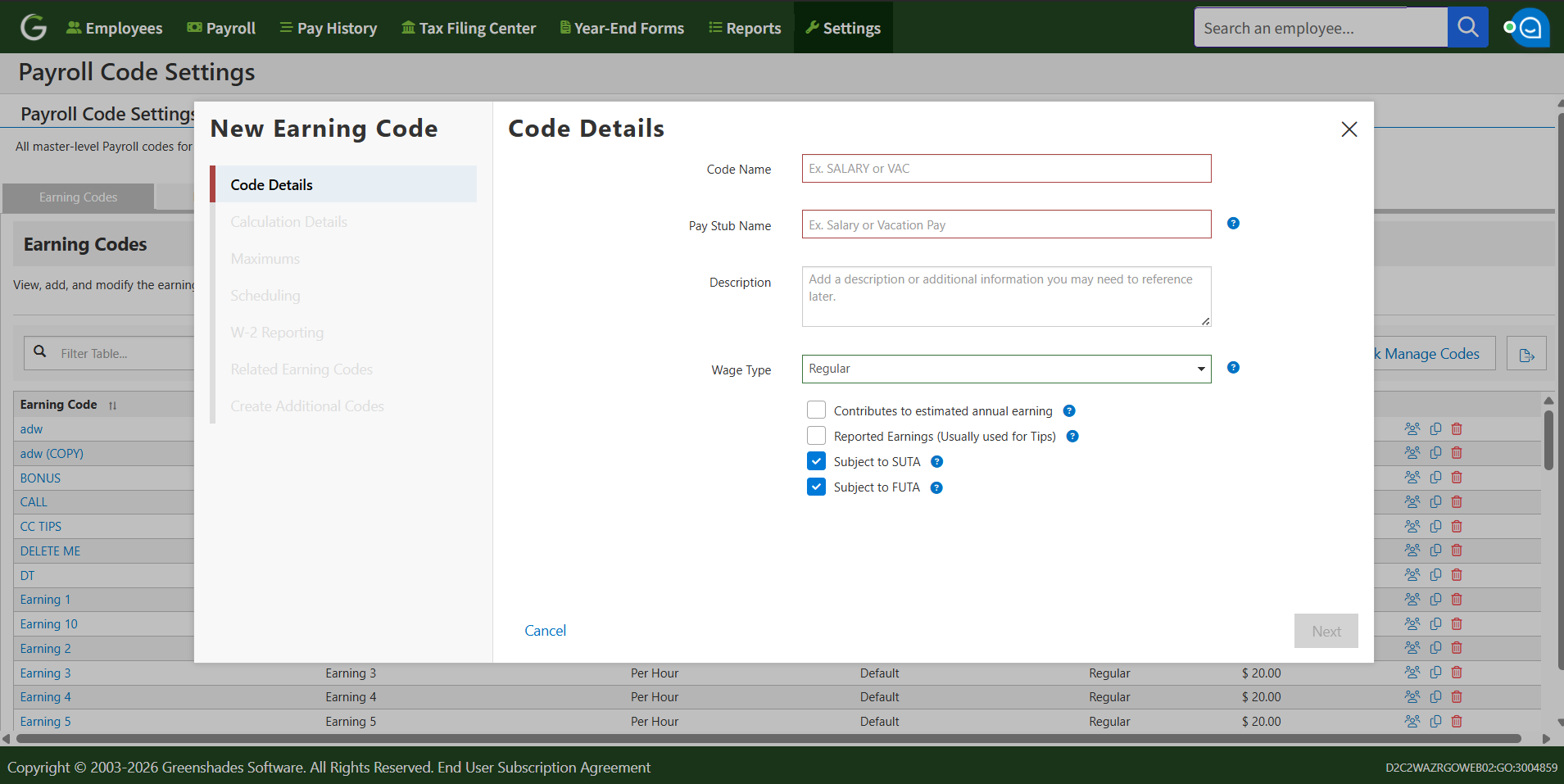
To create a new earning code:

Navigate to
Settings → Payroll → Codes → Create Code

From there, administrators can create a new earning code and select the wage type that best reflects how the earnings should be treated for payroll and tax purposes.

By centralizing earning code configuration, Greenshades helps payroll teams maintain consistent wage classification, reduce manual corrections, and ensure payroll runs smoothly across a wide range of compensation scenarios.

Keep Earning Codes Accurate with Greenshades

The wage type you choose directly impacts tax rates, benefit calculations, and compliance reporting. By aligning each earning code with the appropriate wage type, you will avoid costly errors, prevent tax filing headaches, and ensure your payroll runs exactly as expected.

Do you have questions about special earnings, complex fringe benefits, or unique payroll scenarios? Reach out to the Greenshades team for support. We are always here to help you navigate your most complex payroll challenges.

FAQ's

What is the difference between regular wages and supplemental wages?

Regular wages are payments made for routine work performed during a pay period, such as hourly pay, salaries, and overtime wages. These wages are taxed using standard federal income tax withholding tables.

Supplemental wages are payments made in addition to an employee’s regular earnings. Examples include bonuses, commissions, PTO payouts, severance pay, and certain taxable fringe benefits. Supplemental wages may be taxed using either a flat IRS withholding rate or the aggregate method.

Are bonuses considered supplemental wages?

Yes. Bonuses are generally classified as supplemental wages under IRS rules. Because bonuses are paid in addition to an employee’s normal earnings, payroll systems often treat them as supplemental income for tax withholding purposes.

Are PTO payouts treated as supplemental wages?

PTO payouts are often treated as supplemental wages, particularly when they are paid separately from an employee’s regular paycheck. Examples include unused vacation payouts at termination or PTO buyback programs.

In some cases, employers may combine PTO payouts with regular wages and apply standard withholding using the aggregate method.

How does the IRS tax supplemental wages?

The IRS allows two main methods for withholding federal income tax on supplemental wages:

Percentage method: A flat withholding rate of 22% for most supplemental wages.

Aggregate method: Supplemental wages are combined with regular wages for the pay period and taxed using standard withholding tables.

Special IRS rules may apply when supplemental wages exceed certain thresholds.

Our latest articles, thought leadership, and more

Get the latest updates from our company by subscribing to our newsletter. Stay up-to-date with our content, receive news about our products, and gain industry insights from our experts. Don't miss out on this valuable resource - sign up today!

By subscribing to our email updates, you agree with our Privacy Policy.