06/26/2026

The Greenshades Compliance Corner - Q3 2026

Issue #6, Q3, 2026

Written by Laura Detsch, Tax Specification Compliance Manager at Greenshades

This issue summarizes key compliance developments that may affect payroll, tax, and reporting obligations, along with Greenshades resources that support timely compliance.

Q2 2026 Quarter End

Quarter End processing starts on Wednesday, July 1, 2026.

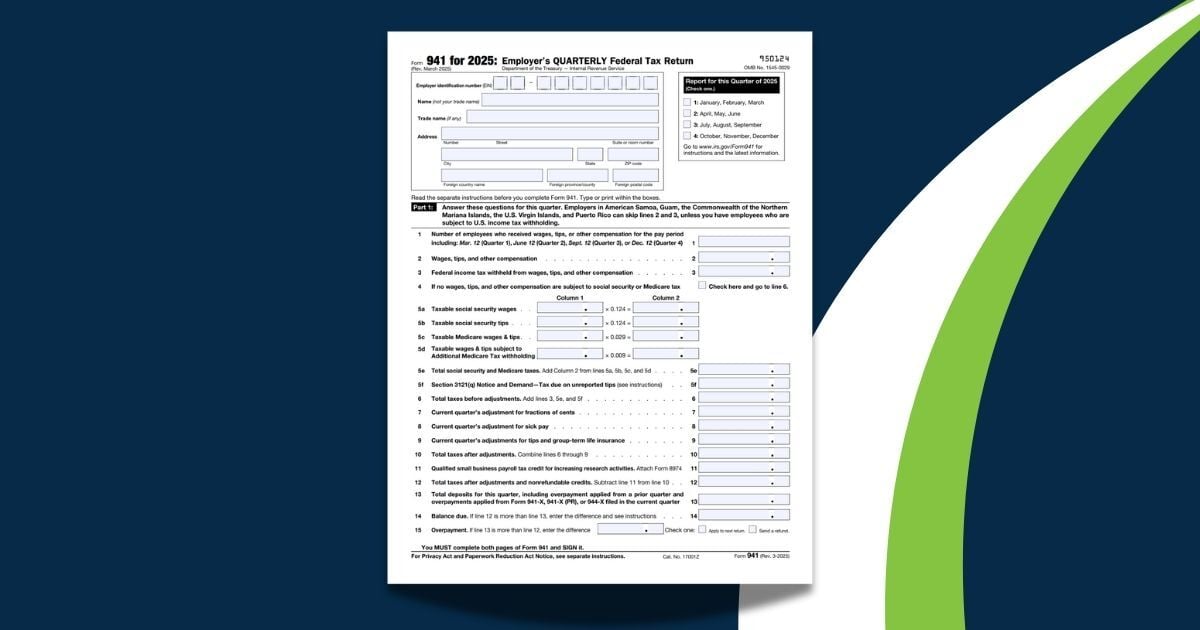
Greenshades filing authorization and supported forms

Greenshades Software Inc. is authorized to transmit supported IRS filings, including Forms 940, 941, 1042, and 1094/1095. Clients may authorize Greenshades Software Inc. as a reporting agent by completing Form 8655, Reporting Agent Authorization. Once authorized, Greenshades can transmit Forms 940, 941, and 1042, and Payroll Tax Service clients may also authorize related payments. The authorization may also permit Greenshades to communicate with the IRS or SSA on the client's behalf, provided the account is not in collection status. Please contact support with questions or for assistance completing the form.

Greenshades also supports transmission of U.S. Forms W-2, selected 1098 and 1099 forms, Forms 1042-S and W-2G, and Canadian T4 and T4A forms. For state and selected local W-2 filings, Greenshades can prepare filing information for you to submit. If you are unsure whether a local W-2 filing is supported, please contact support for confirmation. If you need help mapping local income taxes so Greenshades can prepare or provide the required filing information, please contact Greenshades Support or your Payroll Tax Service representative.

Greenshades also supports quarterly State Unemployment Tax returns, New Hire reporting, and certain IRA reports.

State-level compliance updates

  • Washington State has launched a One-Stop portal for accessing withholding accounts.
  • Kentucky has launched a new Unemployment Insurance portal: KUIP.
  • Wisconsin's MyWisconsin One-Stop portal will be used to access the UI employer portal.
  • Alabama is reinstating its overtime exemption, now aligned with OBBBA requirements and limited to the qualified overtime premium.
  • Effective July 1, 2026, Illinois will no longer treat employer 401(k) contributions as wages for unemployment purposes. Employee contributions will continue to be treated as wages.
  • Effective July 1, 2029, Kentucky will require local jurisdictions that administer Occupational Payroll taxes to develop an electronic filing and payment system.
  • Beginning January 1, 2026, Kentucky school districts may not increase existing Occupational Payroll taxes or impose new ones.
  • Effective May 6, 2026, Utah modified the garnishment administrative fee collection process. The one-time fee will be deducted from the garnished amount before the remaining balance is transmitted to the creditor.
  • Washington State has established a millionaire's tax, effective in 2029.
  • South Carolina revised its withholding tax rates and capped the total EITC amount at $200 per year.
  • Effective February 22, 2026, New York City expanded paid sick and safe leave to include additional unpaid leave. Employees will have access to 32 hours of unpaid sick/safe leave on their first day of employment.
  • New Jersey now requires employers to report any employment separation within seven days.
  • Missouri updated its withholding guidance to require employee withholding amounts to be rounded to the nearest whole dollar.
  • Effective December 15, 2025, the Delaware Department of Labor amended PFML regulations to define an employee who works in multiple states based on whether 60% of wages—not hours—are earned in Delaware.
  • Maine approved a budget that includes a 2% surtax on incomes over $1 million.
  • Virginia is creating a new paid family and medical leave program requiring both employer and employee contributions, effective January 1, 2028.
  • Effective July 1, 2027, Virginia will reduce the maximum amount of disposable earnings subject to garnishment for unpaid state taxes. The limit will be the lesser of 25% of disposable earnings or the amount by which disposable earnings exceed 40 times the state minimum wage.
  • Effective July 17, 2026, New Jersey FLA will reduce the minimum employee threshold to 15 employees and reduce the employee eligibility requirement to three months and 250 hours.

Washington Employment Security Department

Beginning in May 2026, Washington will begin mailing billing statements for outstanding Paid Leave premiums. This is an effort to help employers avoid late filing penalties and monthly interest charges on the unpaid premiums. Starting August 1, 2026, overdue premium balances will accrue interest at 1% per month.

Late filing penalties will apply based on the number of late reports:

  • First late report – warning notice
  • Second late report – $75 penalty
  • Third late report – $150 penalty
  • Additional late reports – $250 penalty

Clients can submit reports and payments online through their employer account. We recommend confirming that your business contact information is current so you continue receiving notices without delay. For the latest information, clients should monitor updates on the Washington PFML website.

Colorado: Important notice — electronic communications requirement is in effect

As of April 3, 2025, Colorado employers and third-party administrators must use Division-approved electronic methods to send and receive Unemployment Insurance benefit communications and wage detail information. This includes quarterly wage reports, employer fact-finding requests, and other required communications.

To help avoid missed notices or account issues, clients should complete these steps:

  • Confirm that a valid email address appears on the "Address Information" screen under "Account Maintenance."
  • Review and approve (or deny) any "Pending" TPA association requests listed in the "Authorized TPAs" section of your Employer Home page.

For additional details, visit the Electronic Communications Requirements page on the CDLE website.

Change to Illinois Minimum Wage Law

On March 19, 2026, the Illinois Supreme Court ruled that the state Minimum Wage Law does not include the Federal Portal-to-Portal Act's exceptions for preliminary and postliminary work. For Illinois employers, required preliminary or postliminary work performed on the employer's premises must be compensated.

The law defines compensable time as "all the time an employee is required to be on duty, or on the employer's premises, or at other prescribed places of work, and any additional time the employee is required or permitted to work for the employer."

Clients with Illinois employees should review timekeeping practices and evaluate any potential impact to overtime.

Important information for NYS-45 bulk upload filers

Reporting total NYS-1 prepayments correctly

When reporting NYS-1 prepayments for a quarter, include only payments made before you upload your NYS-45 wage data. Do not include payments you have not yet submitted. If a balance remains when you upload your NYS-45 wage data, submit that balance with your NYS-45 filing.

Note: Incorrectly reporting NYS-1 prepayments may result in a bill.

Updated instructions for handling failed NYS-45 Web Upload payments

If an electronic payment made through the Pay from bank account feature fails, do not resubmit the payment through the Web Upload application. Instead, send a replacement payment by check. Include the upload confirmation page with the replacement check so the Tax Department can process the file already submitted.

Note: Uploading a second file instead of following these steps may cause processing errors and filing error notices.

To mail replacement checks:

  • Prepare separate checks for the original amounts owed: one for unemployment insurance and one for withholding tax.
  • Write the upload confirmation number and NYS Employment Contributions and Taxes on each check or money order.
  • Include a copy of your upload confirmation page. You can find it in your Online Services account message center; if it was deleted, call 518-485-6654 for assistance.
  • Mail the replacement checks and confirmation page promptly. Overnight delivery is recommended.

Where to mail your checks and confirmation page:

  • USPS Delivery: NYS TAX DEPARTMENT, RPC-NYS-45-V UPLOAD PAYMENT, PO BOX 15148, ALBANY NY 12212-5148
  • Private Delivery Service: NYS TAX DEPARTMENT, RPC-NYS-45-V UPLOAD PAYMENT, 90 COHOES AVE, GREEN ISLAND NY 12183

Please visit the NY State Department of Taxation and Finance website for the most up-to-date information and guidance.

Please view the full article on the web version of the Compliance Corner.

Visa employees and tax withholding

If you employ individuals who work under a visa classification, their visa type may affect payroll tax withholding, reporting, and year-end tax forms. Visa categories may include employment-based, student and exchange, investor and trade, diplomatic and government, visitor, and other classifications. A person's visa classification helps determine whether they are authorized to work in the United States.

For individuals who are authorized to work, employers must follow specific tax and payroll rules based on the visa type and the individual's residency status. For example, the correct withholding form may be Form W-4 or Form 8233, depending on the individual's status, income type, and any applicable treaty position. Most visa classifications are subject to federal income tax withholding. Diplomatic and government visa holders are generally exempt on official income, but non-official income for services performed in the United States may still be taxable. Some visa holders are also subject to Social Security and Medicare taxes. Exemptions may apply based on the visa classification and the individual's tax residency status.

Visa Tax FAQ

Use the FAQ below as a starting point when reviewing federal tax treatment for visa holders and other foreign nationals who work or earn income in the United States.

Why does visa type matter for payroll and tax withholding?

Visa type can affect work authorization, whether income is taxed as U.S.-source or worldwide income, whether Social Security and Medicare taxes apply, and which withholding form should be used.

Which visa holders usually have federal income tax withholding?

Most work-authorized visa holders are subject to some federal income tax withholding. H-1B, L-1, O-1, TN, EB-5, and K-1 workers generally require withholding. Student, exchange, investor, and visitor categories may be treated differently depending on residency status, treaty benefits, and income type.

Are diplomatic and government visa holders exempt from federal income tax?

A-1, A-2, G-1 through G-4, and NATO visa holders are generally exempt on official income. However, non-official income may still be taxable depending on the facts.

When is Form W-4 used instead of Form 8233 or Form W-8BEN?

Form W-4 is generally used for employees subject to regular wage withholding. Form 8233 is commonly used when eligible nonresident alien employees or independent personal services recipients claim a treaty exemption. Form W-8BEN is generally used for certain non-employee payments, such as scholarships, fellowships, royalties, or other income not treated as wages.

Are FICA taxes always withheld from foreign nationals?

No. Social Security and Medicare tax treatment depends on both visa category and tax residency status. For example, many F-1, J-1, M-1, and Q visa holders who are nonresident aliens for tax purposes are generally exempt from FICA on wages paid for services allowed under their visa status. Once they become resident aliens for tax purposes, that exemption generally ends.

How does tax residency affect visa tax treatment?

Tax residency determines whether the individual is generally taxed only on certain U.S.-source income as a nonresident alien or on worldwide income as a resident alien. Residency is usually determined under the green card test or substantial presence test, although special rules may exclude certain days for students, teachers, trainees, diplomats, and others in qualifying categories.

Can a visa holder claim a tax treaty benefit?

Sometimes. Treaty eligibility depends on the person's country of tax residence, visa category, income type, and time in the United States. Supporting documentation is usually required, and treaty benefits may need to be claimed through payroll forms, withholding certificates, or the individual's tax return.

Does visa status determine whether someone is an employee or an independent contractor?

No. Worker classification depends on the facts of the working relationship, not visa status alone. However, visa restrictions may limit the services a person can legally perform, so immigration status and tax classification should both be reviewed before payment.

What year-end tax forms may apply to visa holders?

Depending on the payment type and tax status, year-end reporting may include Form W-2 for wages, Form 1042-S for certain payments to nonresident aliens, including treaty-exempt income, or Form 1099 in limited circumstances. The correct form depends on the payment, residency status, and any applicable exemption.

Can payroll rely on visa category alone to determine tax treatment?

No. Visa category is only one factor. Clients should also review work authorization, tax residency, income type, treaty eligibility, and supporting tax documentation. Because exceptions are common, visa-related tax treatment should be reviewed case by case.

Recent IRS notices

Revenue Procedure 2026-22, Calculation of Employer Shared Responsibility Payments
This revenue procedure provides indexed dollar amounts used to calculate employer shared responsibility payments under Internal Revenue Code § 4980H. Applicable large employers may want to review these amounts when evaluating Affordable Care Act compliance exposure.

Notice 2026-33, Guidance on Qualified Long-Term Care Distributions
This notice provides guidance on qualified long-term care distributions under Internal Revenue Code section 401(a)(39). It addresses disclosure and reporting requirements for certified long-term care insurance providers, guidance for plan administrators and individuals receiving qualified long-term care distributions, safe harbors for plan administrators, and an extended amendment deadline for certain eligible retirement plans.

Notice 2026-34, 2026 Cumulative List of Changes in Plan Qualification Requirements for Defined Benefit Qualified Pre-Approved Plans
This notice provides the 2026 Cumulative List of Changes in Plan Qualification Requirements for Defined Benefit Qualified Pre-Approved Plans. The list supports providers applying for IRS opinion letters during the fourth remedial amendment cycle. Cycle 4 began April 1, 2025, and the submission period runs from August 1, 2026, through July 31, 2027.

Fact Sheet 2026-10, Educational Assistance Programs
The IRS updated frequently asked questions in Fact Sheet 2026-10 regarding educational assistance programs. Educational assistance benefits may be excluded from an employee's gross income when provided under a section 127 educational assistance program and the total does not exceed $5,250. For 2025 and 2026, employees generally will not pay tax on the first $5,250 of these benefits, and employers should not include that amount in box 1 of Form W-2. The exclusion amount will be adjusted for cost-of-living increases after 2026.

IR-2026-46, Business Tax Account
The IRS announced an expansion of its Business Tax Account, giving partnerships, federal, state, and local governments, Indian tribal governments, and tax-exempt organizations access to the online self-service platform. "By opening the Business Tax Account to partnerships, tax-exempts and other organizations, we're giving millions more entities secure, convenient access to their tax information," said IRS Chief Executive Officer Frank J. Bisignano. "Digital access will reduce the burden on these taxpayers because they no longer will be limited to paper and phone interactions to perform simple tasks with the IRS." These newly eligible entities join sole proprietors, S corporations, and C corporations that already have access. This expansion gives more business taxpayers secure digital access to tax information and may reduce reliance on paper or phone interactions for routine tasks.

Additional updates

  • Colorado – Effective January 1, 2027, the number of hours agricultural employees may work before earning overtime increases from 48 to 56 hours.
  • New Jersey – Paid Family Leave eligibility changes take effect July 17, 2026. Employees will become eligible after three months and 250 hours, down from 12 months and 1,000 hours. The employer threshold will also decrease from 30 employees to 15 employees.
  • United States Wage and Hour – The 2019 salary levels have been reinstated for determining whether employees are exempt or non-exempt for overtime purposes.
  • Utah – Effective June 1, 2026, the withholding rate is reduced from 4.5% to 4.45%.
  • Illinois – Effective March 19, 2026, the law changed how compensable time is determined.

Child labor law updates are available on the Compliance Corner website.

Stay ahead of what's changing

See how Greenshades can help your team stay ahead of compliance changes.

Request A Demo

Note: This information is for informational purposes only and does not constitute formal tax, legal, or compliance advice. Always consult with qualified tax advisors, legal counsel, and your organization's internal teams for guidance specific to your situation. Additional regulations may apply. For the most accurate and up-to-date information, refer to official government resources and regulatory agencies.

Our latest articles, thought leadership, and more

Get the latest updates from our company by subscribing to our newsletter. Stay up-to-date with our content, receive news about our products, and gain industry insights from our experts. Don't miss out on this valuable resource - sign up today!

By subscribing to our email updates, you agree with our Privacy Policy.