























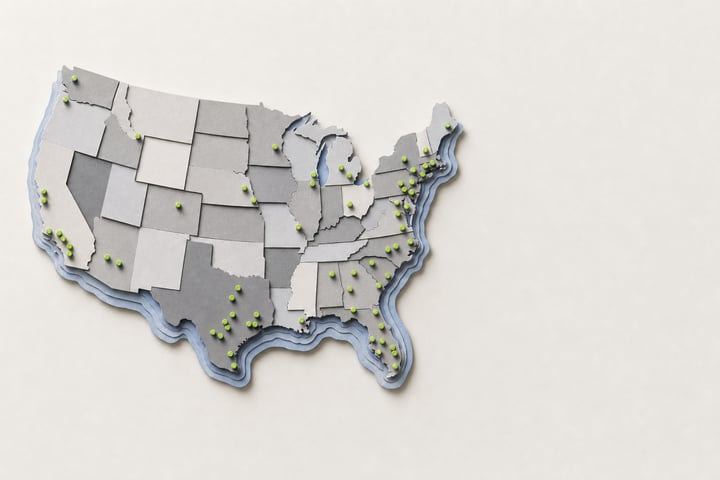
Handling multi-state payroll brings unique challenges, from varying state regulations to diverse reporting requirements. This complexity intensifies at year-end, when employers must file W-2s, 1099s, and state-specific tax reports, all while staying compliant across multiple jurisdictions.
Multi-state payroll is complicated, but it's manageable with the right approach and tools. This post covers the biggest challenges of multi-state payroll compliance, how to handle W-2 and 1099 forms for a dispersed workforce, and how to streamline reporting for 2026.
The short answer
Year-end is harder for multi-state employers because every state sets its own withholding, unemployment, and filing rules, and all of it has to reconcile into one accurate W-2 per employee.
For tax year 2026, the federal side changed too: the W-2 adds new box 12 codes and a split box 14, 1099 reporting thresholds rise, and the W-2 deadline is February 1, 2027.
Understanding the complexity of multi-state payroll
Each state has its own payroll tax laws, deadlines, and reporting requirements. Key differences include:
- Income tax rates and taxable income definitions: Some states exempt certain benefits; others don't.
- Unemployment and disability insurance: Rates and reporting vary widely.
- Local taxes: City, county, or municipal taxes can add another layer of compliance.
- Reciprocal agreements: Ohio, for example, has agreements with Indiana, Kentucky, Michigan, Pennsylvania, and West Virginia. An employee who lives in one of those states and works in Ohio can claim exemption from Ohio withholding.
A multi-state employer isn't managing one set of rules. It's managing several, each requiring precise attention to detail, and getting them wrong means penalties and employees taxed incorrectly.
Handling W-2 and 1099 forms across states
One of the biggest challenges for multi-state payroll tax compliance is preparing and filing year-end forms:
- W-2s: For employees who worked in multiple states, wages must be allocated properly to each state. Employers also need to know which states require electronic filing and whether additional state-specific W-2s are needed.
- 1099s: Independent contractor reporting varies by state. Some require separate state filings, others don't. Federal reporting changed for 2026 as well: the 1099-NEC and 1099-MISC thresholds rise to $2,000, and both forms add tip and overtime boxes.
Missing or misreporting income across state lines can result in fines and create headaches for both employers and employees.
W-2 deadline and Social Security wage base for 2026
- W-2 deadline: Furnish to employees and file with the SSA by February 1, 2027, since January 31 falls on a Sunday.
- Social Security wage base: Rises to $184,500 for 2026, up from $176,100 in 2025. The cap is federal, so an employee's wages from one employer count toward a single limit no matter how many states those wages are allocated to.

Stay ahead of every deadline
Your 2027 compliance calendar
A month-by-month guide with all key federal payroll and tax deadlines, holidays, and monthly tips.
Bookmark Your Copy →Consolidating payroll data across states
The biggest challenge at year-end is consolidating payroll data across multiple states. Accurate reporting requires every detail (wages, withholdings, benefits, and deductions) to be correct.
To simplify this:
- Centralize payroll data in a single solution to manage multiple EINs and state filings.
- Automate state and local updates so tax changes are applied consistently. Automated payroll taxes handle calculation, deposits, and filings.
- Schedule audits throughout the year to catch discrepancies before they snowball at year-end.
Why this matters: Proactive payroll audits reduce errors, protect compliance, and keep employees confident in their year-end reporting. Our W-2 and 1099 filing checklist walks through preparing, verifying, and e-filing in three steps.
How Greenshades handles multi-state year-end
Greenshades Tax & Compliance centralizes payroll tax filings across federal, state, and local levels for multi-state and multi-entity payroll. With automated updates, compliance checks, and unlimited workspaces for organizations with multiple EINs, you can:
- Stay up to date on changing state regulations.
- Generate, validate, and file your year-end forms either directly to federal agencies or by downloading the e-file form.
- Conduct audits with built-in error-prevention tools.
- Reduce the risk of missed deadlines or costly corrections.
The bottom line for multi-state employers
Multi-state payroll compliance is complex, but with the right systems and proactive processes, year-end reporting gets simpler, every jurisdiction stays covered, and costly mistakes get caught early.
Note: This information is for informational purposes only and does not constitute formal tax, legal, or compliance advice. Always consult with qualified tax advisors, legal counsel, and your organization's internal teams for guidance specific to your situation. Additional regulations may apply. For the most accurate and up-to-date information, refer to official government resources and regulatory agencies.